


⚡ Quick Answer: What Is Agentic AI in Customer Support?
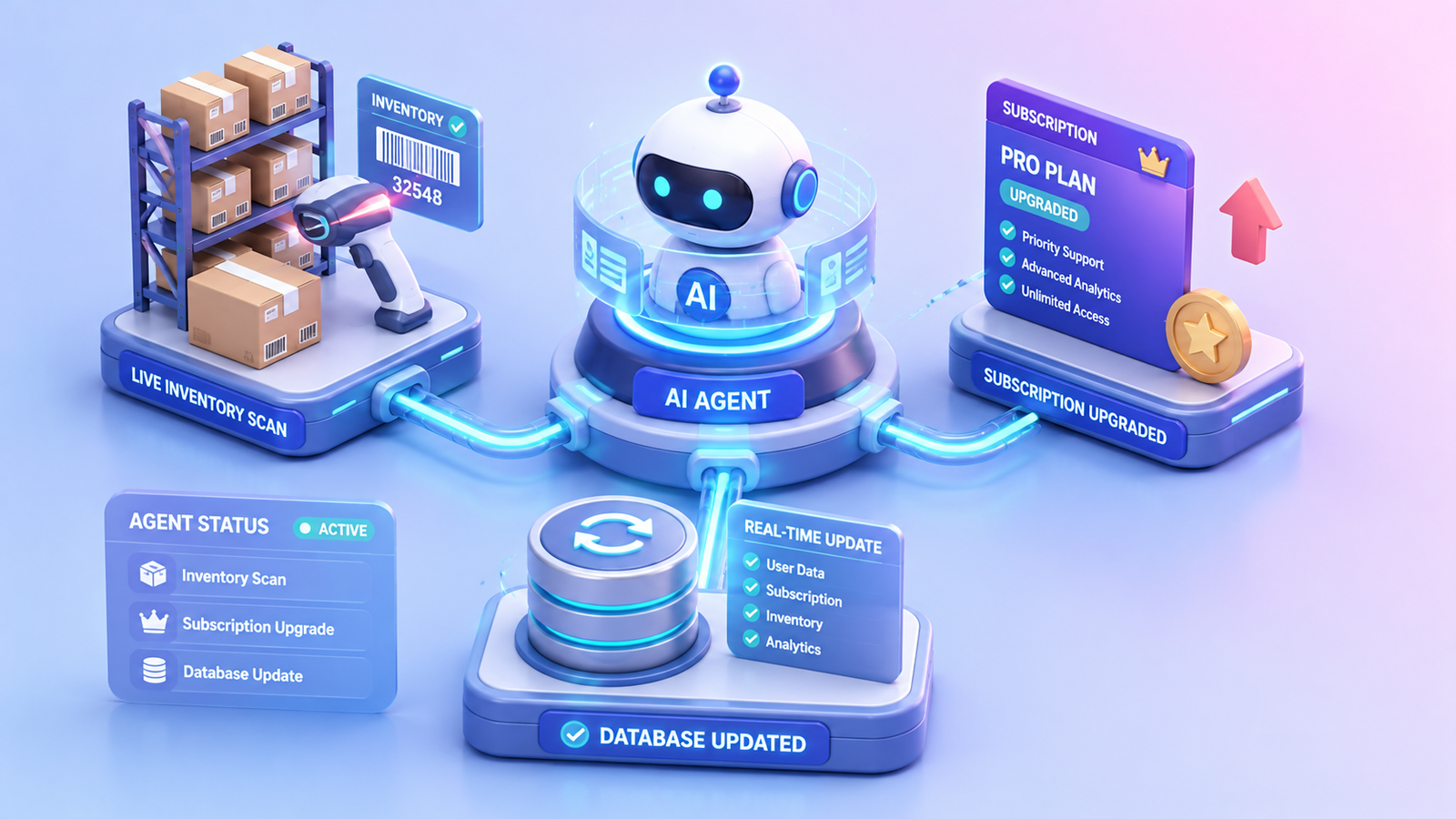
Agentic AI refers to autonomous AI systems capable of reasoning, planning, and executing multi-step business workflows directly inside your software ecosystem. Unlike traditional rule-based or generative chatbots that merely provide static text answers, an AI agent uses tool calling and API orchestration to take real action—such as updating subscriptions, verifying live inventory, processing refunds, or rerouting shipments—resolving tickets end-to-end without needing human intervention.
The Chatbot Fallacy: Why Answers Aren’t Enough
Traditional customer service chatbots are digital manuals masquerading as interactive assistance. When a customer asks, “Can I change my delivery address?” or “Can I upgrade my monthly subscription?”, a standard chatbot typically points them to a help center article or walks them through a tedious 8-step manual process.
If the customer encounters an error along the way, the chatbot hits a wall and triggers a handoff to a human representative.
This creates friction for the customer and leaves your human support agents burdened with administrative, click-heavy tasks. Modern consumers do not want to be instructed on how to perform maintenance on their accounts—they want the system to do it for them instantly.
That distinction defines the transition from Generative Chat to Agentic Execution.
Traditional Chatbots vs. Autonomous Agentic AI
| Dimension | Traditional FAQ / Generative Chatbot | Autonomous Agentic AI Agent |
|---|---|---|
| Core Function | Information retrieval & text output | Task execution & workflow resolution |
| System Access | Read-only access to FAQs or knowledge bases | Read/Write access across CRMs, ERPs, and billing APIs |
| Workflow Capability | Single-turn response generation | Multi-step reasoning and autonomous problem-solving |
| Human Workload Impact | Shifts effort back to the user or escalates | Resolves issues end-to-end; eliminates human friction |
| Data Synchronization | None; static context | Live, bi-directional sync across business databases |
How Agentic AI Solves Complex Support Scenarios
Agentic AI operates with an operational toolkit. When given a goal (e.g., “Resolve this customer’s delivery delay”), it dynamically chooses which software tools, database queries, or API calls are required to complete the objective.
+-------------------+     +--------------------+     +---------------------+     +--------------------+
| Customer Intent   | --> | AI Agent Reasoning | --> | Tool / API Calling  | --> | Confirmed Outcome  |
| "Pause my account"|     | (Plans execution)  |     | (Stripe / Shopify)  |     | (Database updated) |
+-------------------+     +--------------------+     +---------------------+     +--------------------+
1. Subscription & Account Modifications
- The Traditional Way: The chatbot sends a link to account settings, where the user gets lost trying to update their tier or payment method.
- The Agentic Way: The AI agent verifies user identity via OAuth, queries the payment gateway (e.g., Stripe API) to calculate prorated charges, executes the subscription plan upgrade, updates the CRM, and sends a customized receipt—all within a single 30-second conversation window.
2. Live ERP & Inventory Management
- The Traditional Way: A customer asks if an item is available in a specific regional warehouse. The bot says, “Check our store catalog.”
- The Agentic Way: The AI agent queries your warehouse management software (WMS) in real-time, identifies stock levels across three fulfillment centers, calculates regional ground shipping speeds, and offers to reserve the item directly for the customer.
3. Automated Order Interception & Shipping Reroutes
- The Traditional Way: A user submits an urgent address change request after ordering. The ticket sits in an email queue for 4 hours while the package gets dispatched to the wrong address.
- The Agentic Way: The AI agent detects the address change intent, pings your shipping partner’s API (e.g., FedEx/UPS) to intercept the label before printing, updates the shipping address in your fulfillment database, and logs the change in HubSpot without human delay.
The 3 Pillars of Deploying Agentic AI Safely
Giving AI the authority to execute database writes and financial actions requires robust controls. Leading enterprises deploy Agentic AI using three foundational guardrails:
📌 Key Architectural Requirement: Never allow an AI agent unfettered raw database access. All actions must be brokered through structured API endpoints with defined permissions.
- Deterministic Function Calling: Limit the agent to pre-approved, strictly typed functions (e.g.,
update_shipping_address(),issue_discount_code()). The LLM decides when to call the function based on conversation context, but the code execution itself follows strict business logic. - Threshold Guardrails: Define absolute boundaries for autonomous actions. For instance, allow the AI agent to issue refunds under $50 autonomously, while requiring human-in-the-loop approval for higher amounts.
- Audit Trails & Observability: Log every API call, JSON payload, and context state. If an anomaly occurs, your engineering team can review the agent’s exact chain-of-thought reasoning and adjust parameters.
Strategic Takeaway
The era of passive, text-only chatbots is over. By upgrading from simple Q&A bots to Agentic AI systems, organizations transform support operations from an expensive cost center into an agile, 24/7 task-execution force—slashing ticket queues, removing repetitive admin work from human teams, and giving customers instantaneous resolutions.